Audrey Lambry, Head of Impact and Sustainability, is responsible for the impact strategy of the fund dedicated to planetary boundaries.
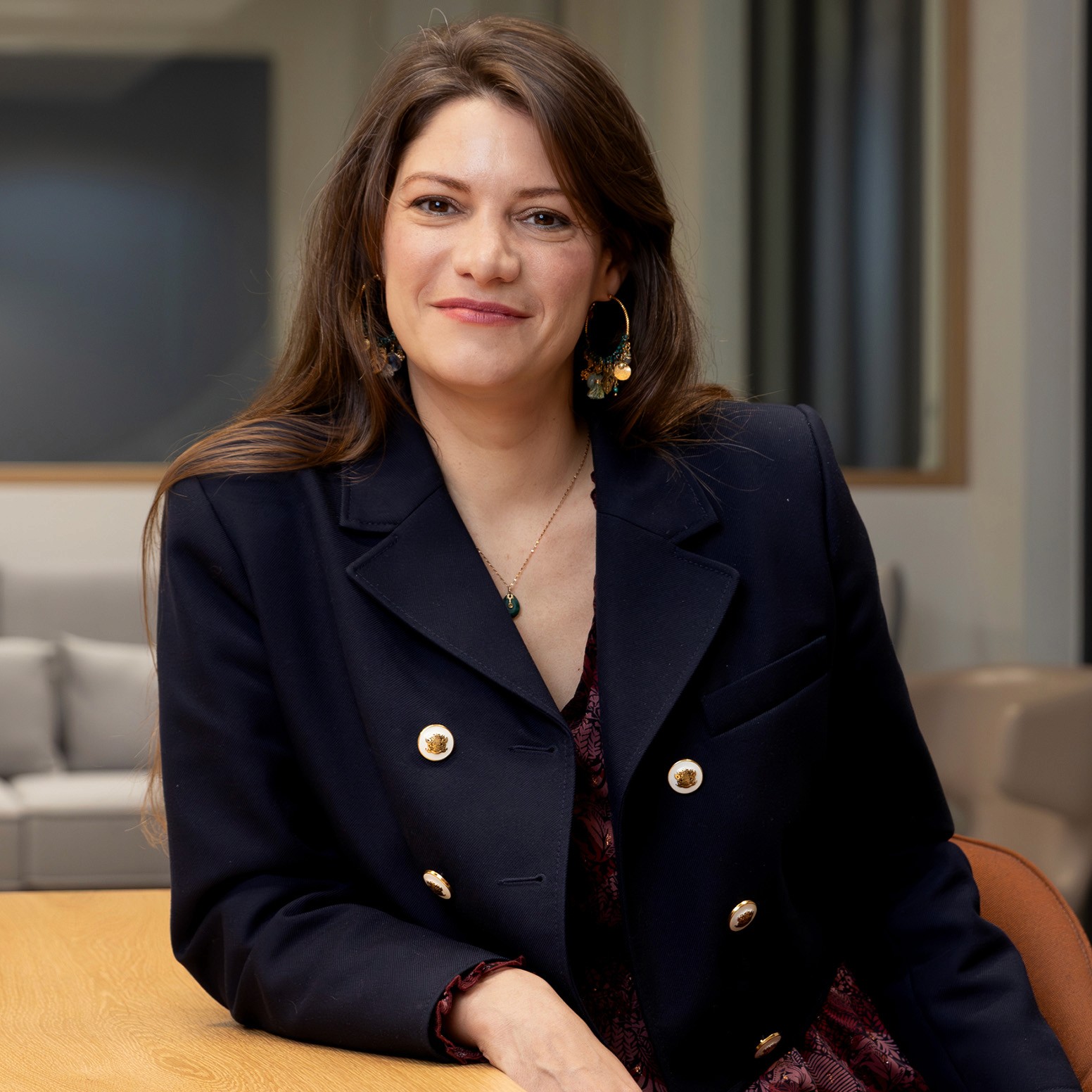
Interview with Audrey Lambry conducted by Dorothée Browaeys, Chair of Vivøices.
Audrey Lambry, Director of Impact and Sustainability at Eurazeo, is responsible for steering the impact strategy of the pioneering buyout fund dedicated to planetary boundaries, the Eurazeo Planetary Boundaries Fund (EPBF). In this interview, she discusses the fund’s approach to nature and outlines the methodology developed in recent years to measure and manage the impacts of the companies it finances.
How does your company currently take the environment into account? What tools and specific internal structures does it use? How are roles allocated? What is the roadmap?
Since acquiring Idinvest in 2018, Eurazeo has gradually established itself as a major player in alternative investment in Europe, with nearly forty billion euros in assets under management across three asset classes (Private Equity, Real Assets and Private Debt), spread across generalist funds and impact funds.
In total, we finance nearly 600 companies and real-economy assets, providing them with either equity or debt. Our various strategies are tailored to support players at different stages of maturity: start-ups, growing companies (with a focus on scaling up) with a predominantly digital or tech component, or medium-sized companies (particularly European SMEs and mid-market firms that are already profitable – buyouts) which we support as they embark on a new chapter in their history and development.
Environmental and climate issues were incorporated into our approach very early on through the integration of ESG as early as 2008, when the first ESG director was recruited. Eurazeo now structures its sustainability strategy around a fundamental commitment and two complementary levers: firstly, systematic consideration of ESG risks prior to investment, with 100% of transactions subject to ESG due diligence and a policy of excluding the most harmful sectors, ranging from the fossil fuel industry to armaments, including spirits and tobacco, pesticides and PFAS.
Secondly, supporting assets in their transition towards more sustainable and resilient models, via Sustainability-Linked Loans for private debt — today, 98% of financing documentation incorporates ESG criteria and associated incentive mechanisms — and, on the equity side, monitoring the ESG maturity of portfolio companies using 20 indicators and annual progress plans. Eurazeo has also implemented a major decarbonisation programme, with 28% of eligible portfolio companies having set decarbonisation targets and pathways validated by SBTi*.
Finally, impact investing, notably through dedicated funds that finance solutions with a proven positive contribution, such as our Planetary Boundaries fund launched in 2025, designed to support companies having a net positive impact on the preservation of planetary boundaries. In 2025, this represented €6.1 billion, or 16% of Eurazeo’s assets under management.
*expressed in terms of capital invested. Eligible companies according to the Science Based Targets initiative’s (SBTi) criteria and methodologies.
What methods have you developed for selecting high-impact contributions? How do you envisage putting the planetary boundaries into practice?
For our Planetary Boundaries Fund (EPBF), we have implemented a robust methodology based on an approach that uses planetary boundaries as a systemic framework and integrates impact assessment at every stage of the investment cycle, so that scientific evaluation informs investment decisions. Firstly, we have defined criteria to objectively assess companies’ contributions in order to demonstrate a significant impact on at least one of the nine planetary boundaries, distinguishing between regenerative actions and those aimed at avoiding or reducing impact. We then quantify these impacts on the various planetary boundaries, with the magnitude of the impact being of paramount importance.
A concrete example is Bioline AgroSciences, a biocontrol company that uses beneficial insects—natural predators of crop pests—to replace pesticides whilst protecting crops. This approach thus enables a reduction in the application of chemicals and limits the erosion of the biosphere by avoiding one of the major pressures on soils and aquatic environments adjacent to crops. Through our analysis of 190 agronomic programmes, we have demonstrated that these solutions can replace 60 targeted pesticides, some of which are highly harmful and used in large quantities, particularly in countries with weak environmental regulations.
We are also working to ensure that, whilst upholding a planetary boundary, we do not exacerbate other issues by adopting a systemic approach that assesses both the company’s positive impact and its negative externalities. Finally, we are rolling out impact acceleration plans tailored specifically to each company, in order to take action during the holding period and maximise its positive impact.

What practical frameworks do you use to create an assessment grid for the companies you fund?
We have spent two years conducting R&D to develop a 360-degree impact assessment framework, featuring a progressive analysis that quickly filters out irrelevant cases, followed by rigorous quantification aligned with the definitions of planetary boundaries set out by J. Rockström et al. (2009). We have now tested it on around ten investment cases across a wide range of sectors (renewable energy, sustainable agriculture, water treatment and management, etc.).
For water, for example, we are interested in solutions that help preserve the quality of the resource, particularly through treatment and decontamination approaches; however, in this specific case, the impact does not relate to the water planetary boundary (as treatments do not affect the quantity of the resource) but rather to the ‘New Entities’ planetary boundary, which concerns the release of chemicals. These should be distinguished from solutions that address the quantity of available water and the preservation of the resource, the impact of which is clearly reflected in the Freshwater Use planetary boundary.
It is essential to fully understand the framework of the nine planetary boundaries—assessment, control variables—to avoid double-counting; their strength lies in a non-redundant yet interconnected interpretation of impacts. Some areas remain more difficult to quantify than others. Ecotoxicology, for example, poses problems (incomplete databases, huge margins of error), making the results difficult to manage. These measurements must be supplemented by qualitative analyses in order to identify possible product substitutions and work towards reducing doses. However, these holistic impact analyses, which form the basis of our methodology, are invaluable for identifying the best active ingredients capable of delivering dual performance—economic and environmental—but also for informing impact acceleration plans and putting them to work in creating value.
Who are the stakeholders you work with to develop your methods? What is your internal research process??
To carry out impact assessments, we work with a number of experts across Europe, seeking out the leading specialists in fields such as Life Cycle Assessment (LCA), biodiversity and ecotoxicity. We also sometimes work with academic researchers: for example, as part of Bioline AgroSciences, we have consulted with several researchers from INRAE on biocontrol solutions, to understand their risks and benefits, market authorisation requirements and the most appropriate impact assessment methods.
We carry out one major R&D project per year, such as the recent testing of the Organisational LCA methodology — a life cycle assessment at the organisational level, rather than the product level — which provides a single impact score by standardising planetary boundaries (to make units comparable) via an overall ratio (water, ecotoxicity, soil, carbon), a first of its kind. By reconciling the various boundaries in this way rather than analysing them in silos, we can grasp the concept of net contribution by comparing the negative impacts caused with the positive impacts generated. We have thus demonstrated that a company can be ‘net positive’, which is a first!
We would subsequently like to share this proposed approach as open-source, and ideally continue to develop it through closer collaboration with scientific institutions and the research community in particular.
How do you view the role that a Nature trustee might play within your organisation?
I fully endorse the idea of putting nature on the company board, although I believe the profile of the representative should be tailored to the company’s specific context. This is a matter close to our hearts at EPBF, and particularly to Erwann Le Ligné, co-director of the Planetary Boundaries Fund, who was inspired by this issue being highlighted when we took part in the Business Climate Convention. We incorporated this concern at a very early stage by ensuring that the impact manager was included on the boards of the companies in our portfolio.
In the Planetary Boundaries Fund, there are two of us dedicated to impact, with scientific backgrounds and fully integrated into the investment team. We sit on the boards of all the companies in which we invest. In this way, we have already brought impact — and therefore planetary boundaries — to the board. Above all, we have brought impact issues into all governance bodies (monthly business review sessions, quarterly board meetings with investors, etc.). We are a voting member with the same rights as all other members; we embody impact and ensure that Planetary Boundaries are taken into account and respected in all decisions.
The philosophy behind this is really to inform strategic decisions by adding a complementary dimension: that of planetary boundaries. This involves highlighting the risks they may pose to the company, its market and its operations, as well as the opportunities arising from the transformation of business models. For example, at SMP Energies, the second-largest company in the EPBF portfolio and the French leader in deep drilling for geothermal energy, we are working on the ecotoxicity of the products used in drilling muds and believe we can reduce operating costs whilst improving the environmental footprint.
Did taking this impact into account require you to train your managers internally? Did it lead to new external connections with new stakeholders (NGOs, academics, public authorities, local authorities, investors)? In short, has your ecosystem changed?
We have invested heavily in training staff at the Earth’s Boundaries Fund (EPBF), as well as at portfolio companies and their management teams. Although the companies may be ‘impact-driven’, their managers are not always equipped to translate sustainability into a formalised, quantified and integrated strategic vision. That is why we support them, so that sustainability can be leveraged to benefit the company, its reputation and its strategy.
To do this, we train them on planetary boundaries and the fund’s impact methodology, sharing our framework, due diligence findings and key areas of focus, whilst embedding these topics within governance through board meetings, monthly updates and regular follow-ups. At the same time, we provide methodological support to harmonise impact metrics, as well as ad hoc support to monitor and facilitate the roll-out of Impact Acceleration plans.
In the future, we would also like to facilitate technical and scientific collaboration in order to bridge the gap between academic research and practical needs on the ground. Our portfolio companies provide excellent case studies.
We can only hope that as many investors as possible will take up these issues and tools to firmly integrate impact into their investment strategy. Overall, I see a real challenge in breaking down the barriers between scientific and technical experts and the operational needs of impact actors on the ground, who remain small businesses operating in complex and demanding markets. This is the essential condition for ensuring that our economic decisions are more firmly grounded in scientific realities and serve the overall resilience of our economy and society.