A conversation with Sénamé Koffi of the 2050 Fund, where he acts as a spokesperson for Nature.
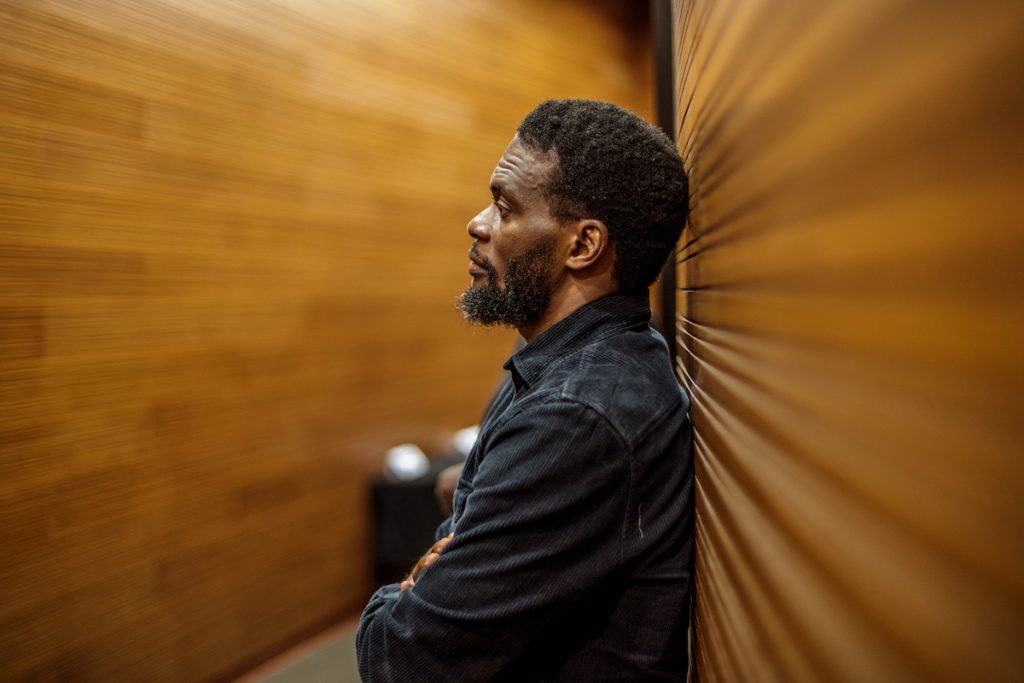
An interview with Sénamé Koffi Agbodjinou conducted by Dorothée Browaeys, Chair of Vivøices.
Sénamé Koffi Agbodjinou is a Togolese architect, anthropologist and social entrepreneur. He is the Nature Guardian at the Fonds 2050.
What did Marie Ekeland, founder of the 2050 Fund, expect from you when she asked you to contribute to its strategy as a steward?
Marie brought me in, I imagine, with a view to opening up to other ways of paying attention and relating to the world. Perhaps even to broaden the very frame of what is meant by “the world”.
Indeed, there are worldviews, notably African ones, that understand reality as intertwined. I try to offer a translation of this into modernity. Much of my thinking and my work in connection with startup culture aims to point towards and sketch, based on these traditional ontologies, sustainable alternatives to the paradigm of profitability, itself the child of a worldview that splits reality into separate parts.
I develop something like a philosophy of bare feet on the ground, to reopen horizons where pure calculation is sterile. That is a thread for the 2050 Fund to explore in its ambition to prototype long-term investments aligned with living systems.
I am also rooted in Africa as a space for action, and it is strategically important for the 2050 Fund to observe it. Its unprecedented demographic growth represents a unique opportunity to inspire solutions at scale, while the size of cities is set to triple and material consumption, for example, is expected to rise by nearly 800% in the coming years. The potential of this continent to shape the future lends itself ideally to the bold experiment of refounding the act of investing so that it responds to planetary challenges.
These are the kinds of options that a visionary fund would have, allowing it, in an already saturated venture-capital market, to stand out through a better understanding of systemic risks, ecological and social, and the ability to identify more resilient projects.
My presence on the Board, I think, is part of the many forms of care that Marie Ekeland has taken, in the hope of creating the conditions for that “fertility” of the future that the 2050 Fund seeks.
“C’est là, dans la capacité à reconvoquer du naturel partout où il a été chassé, que se niche le vrai potentiel d’innovation radicale aujourd’hui.”
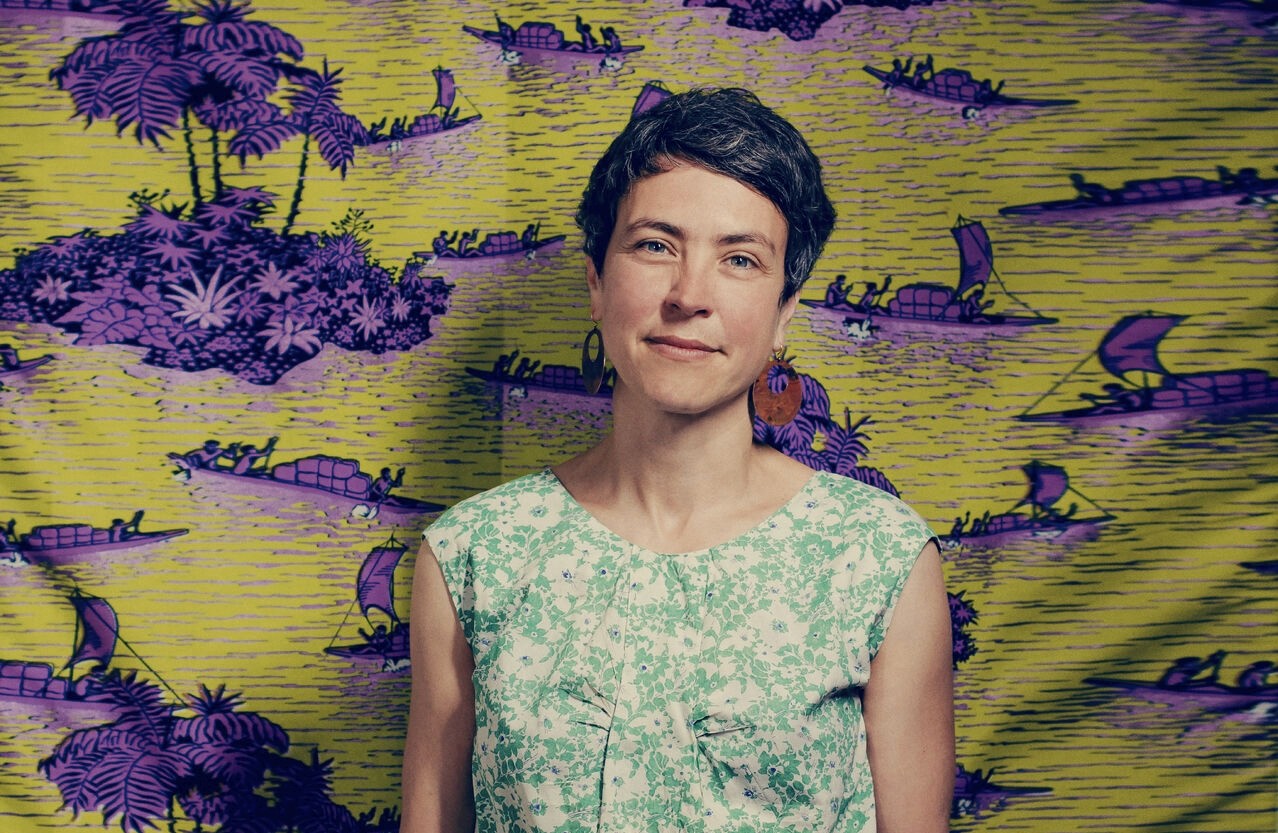
©Fonds 2050, Marie Ekeland
For you, who are something of a spokesperson for Nature at 2050, how do you go about this? According to which criteria, references, and guiding principles?
In a committee, such as one I have known, that might deal, for example, with the global repair of colonial harm, the question is precisely who “speaks for” nature. For there, nature is conceptually what has been injured. The great colonial adventure is simply a generalisation of the Cartesian ideal of subjecting nature to non-European realities. Hence, the limits of the ecological movement, which struggles to grasp that the problem is in fact the continuation of the naturalist paradigm and its colonial gesture at the very heart of Western contemporaneity.
I see my role on the 2050 Board differently. Here, the issue is to address the future. If there is a responsibility, it would be to encourage awareness of nature’s absence, so as to foster positions capable of bringing it back more radically to the heart of a contemporary world marked by artificiality.
There is, in fact, a growing acceleration in the process of artificialisation, which I sequence as “industrial” first with the synthetic (Marx), then “media” with the “spectacular” (Debord), and now “digital” at a stage I call the “unreal” (Orwell). The artificialisation of the social and of being — often not counted as “natural” degradation — forms a system with the climate issue, and each feeds the other. This makes it possible for such a coherent reifying paradigm that even its critique becomes mired in it.
I help to reclassify certain obvious assumptions by exposing this artificial and simplifying way of thinking, which, in reality, only adds to the harm. And I try to show that it is there, in the capacity to summon the natural back wherever it has been driven out, that the true potential of radical innovation lies today. It lies less in trying to transform decision-making itself than in questioning the conditions under which it is made.
My references are scientific as well as vernacular, anthropological as well as cosmological. My criteria are those of inextricability, recursion, redistribution and inclusivity — all that makes nature irreducible. My compass points towards the wisdom of the margins of the world. I rely on structuring oppositions: between the sustainable and the regenerative, between development and stewardship, between occupation and inhabitation.
I modestly hope that this helps to detect blind spots, avoid destructive investments, and enrich the reading of projects.
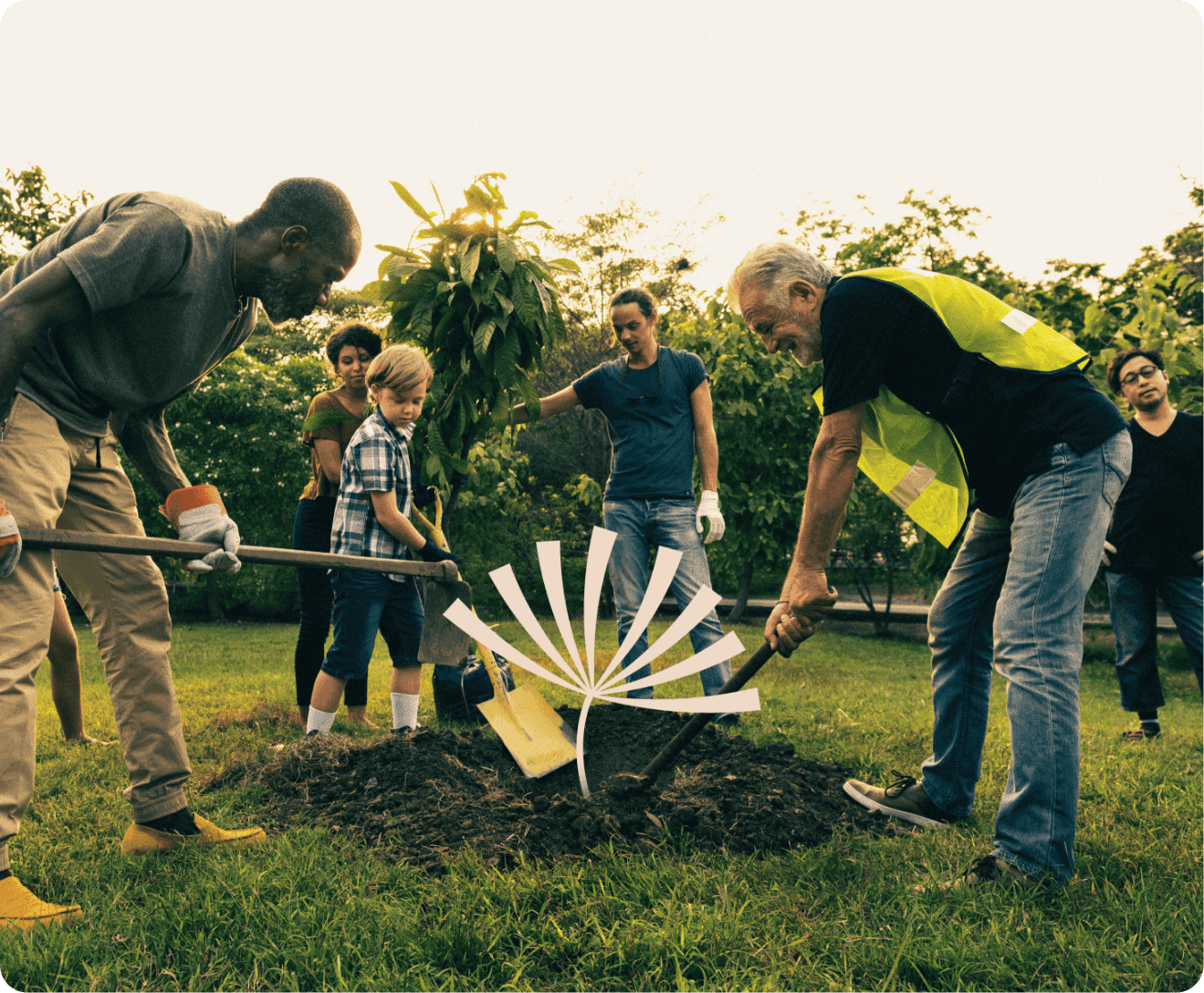
©Fonds 2050
What effects do your presence and interventions have on the leaders of 2050?
It is difficult for me to speak directly or measurably about “effects”, because what I can bring is less about influence than about a subtle — often discreet — shifting of frameworks of perception. I believe I act as an element of gentle friction, a resource of registers, as you have seen, that are not immediately operational within classical decision-making logics, but which are increasingly the language of science itself.
For example, when analysing a project, where discussion would naturally revolve around market, scalability or return on investment, I can shift the question towards: what relationships does the project create? What does it transform within the environment — human and non-human? Does it thicken life, or does it contribute to its impoverishment?
This kind of shift often changes the very nature of the discussion. In other cases, insisting on the materiality of innovations — resources mobilised, soils affected, chains of dependency created, and so on — forces people to reconsider certain trajectory constraints that are also perceived as beyond question.
People around the table speak the language of finance; they understand each other, even in dissonance.
I very much appreciate the fact that the 2050 Fund welcomes cognitive dissonance. People may have their hand on their heart, yet are often caught in something almost machinic that they do not allow themselves to question. Dissonance is a crack in the apparent stability of the concept; it tells us that we are within a paradigm that is not the real, and that this paradigm is dysfunctional. Or, to use another metaphor, it is like a crack in a simulation. It is precious. The 2050 Fund carefully collects dissonance and deploys an “alignment” perspective, which is its real product, to address it.
The search for alignment is not at all about reaching agreement between actors, but about a subtle work of orienting the common goal so that it is not missed. It relies on new vibrations to re-energise, distil a few points of reference, re-architect a shared meaning, and reach resonance again.
I am a crack within the crack.
What difficulties or shortcomings do you experience in making Nature real? What could be improved?
There is a difficulty that is both conceptual and operational: how do we bring forth something that exceeds the very categories through which we make our decisions? Another shortcoming lies in language. We have extremely sophisticated tools for speaking about performance, growth and optimisation — but very few for describing the quality of relationships, the density of life, or the forms of mutual dependence that constitute us. This lexical deficit limits our capacity to think, and therefore to act.
There is also a question of temporality. The logics within which we operate remain largely indexed to the short term, even in frameworks that aspire to be more ambitious. Yet nature unfolds at rhythms that exceed these horizons. This creates a permanent tension between what we perceive and what we should take into account.
“Making nature real no longer means giving it a place in our systems, but accepting that our systems must reorganise themselves from it.”
Nature appears as just one variable among others: a parameter to integrate, a risk to mitigate, or at best a resource to preserve. But it is rarely seen as an organising principle. Yet making nature real no longer means giving it a place in our systems, but accepting that our systems must reorganise themselves from it. Even though this is traditional common sense, it confronts our inherited frame of perception: an infrastructure, both mental and institutional, deeply structured by separation — naturalism. We must move from the inherited to the negotiated. That is to say, we need to develop a paradigm capable of permanent, situated renegotiation of things and with things: steering the horizon differently and opportunely.
One can also try to broaden the horizon itself by stabilising language.
In Plato’s myth of the cave, the prisoner who escapes and discovers the world returns to warn his companions that they are the object of a “simulation”. Plato warns that he risks being mocked or killed. I think the prisoner knows this, but goes back anyway.
We have not studied enough the syndrome of the escaped missionary. Beyond responsibility, there is in him something of a high sense of entrepreneurship. Restoring the real makes it possible to develop beliefs that encode reality differently. As far as nature is concerned, there are new aspirations to be found: listening to relationships, being rooted in territories, composing with the spirit of place… An entire territory that is still unexplored for innovation and entrepreneurship.
©Fonds 2050
How can the diversity of living beings be represented from the perspective of Nature?
The living world is not a collection but a knot of interdependencies. Its diversity is not a multiplicity of species, but of relationships: a system of attachments.
“Represent” implies distance; it is still a naturalist claim. In iconography, for instance, it confines itself to the figurative: to performing the plausible. That is the basis of European pictorial art. It can only account for things in an imperfect, reductive way.
Traditional societies aim higher. Philippe Descola shows how the figuration of these societies, which seems perplexing to Western eyes, is justified by a refusal to create any distance from nature.
Perhaps the 2050 Fund also needs to mobilise the same radicalism. Perhaps we need to think in terms of multiple, original angles, points of entry into reality from behind, and so on, rather than a unified representation: multiplying viewpoints, crossing disciplines, allowing heterogeneous forms of knowledge to coexist. This produces a less clear image, but a truer one.
It therefore seems to me that the question must be shifted: rather than seeking to represent the diversity of life, we should create the conditions for that diversity to be expressed in its radicality.
This first implies moving away from a hierarchical view of living beings, where the human being occupies a dominant position, and all other forms of life are relegated to functions: resources, services, scenery.
In this perspective, representation necessarily becomes indirect and situated. It passes through mediations: scientific ones, of course, but also sensory, cultural and even spiritual ones. Vernacular knowledge, for example, does not describe life analytically, but accounts for it through practices, stories, prohibitions and uses — all ways of maintaining balance. We must accept that this diversity can never be entirely translated. Wanting to illuminate everything risks flattening, simplifying or even neutralising precisely what one seeks to preserve. Like the gbegbe grass in Togo, which dies as soon as its root is found.
“We need to rethink who “counts” in investment decisions so as to move from extractive capital to relational capital.”
The ambition of 2050 is to address the structuring elements of our reality: the city, carbon, oceans, food, and so on; in other words, the environments and conditions from which lives unfold. Giving hospitality to life in its radicality cannot, from this perspective, be merely an added gesture. It is the very foundation of the fund’s project.
That means shifting investment criteria: no longer assessing only economic performance, but also the quality of the relationships a project maintains with living systems. It is a way of moving from capital that extracts to capital that cares for the very conditions of its own possibility, and of making the decision table in an investment committee more expansive by including impacted ecosystems, natural resources mobilised, local communities, future generations, and so on, who normally have no voice.
How can we find a common language that helps us move beyond silos of expertise — finance in 2050, for example — to consider the interdependence of activities with culture, nature and local communities?
The challenge may be more ontological than linguistic. We should stop thinking of our existence as separate.
Expert languages, especially financial ones, are powerful but partial. They are optimised for certain dimensions of reality: value, risk and growth; but they leave in the shadows a whole set of interdependencies that cannot easily be quantified: cultural attachments, ecological balances, community dynamics. Essential dimensions of reality are thus rendered invisible.
The silent work of nature — with no market purpose, and yet without which there would be no life — is, for example, completely greyed out in any standard accounting system. It is incommensurable: we cannot measure it, yet it is essential. Becoming aware of it and translating that awareness into dispositions would lead to a form of care being guaranteed for it at all times.
Even within this framework, my role would be to warn against automatic forms of thinking, such as those I see flourishing, which propose to make nature a subject of rights, or even to remunerate it. That would be just as naturalist a trap: after objectifying Nature, to subjectify it, while the representation of the world remains unchanged.
The real issue is to encourage spaces where all registers can meet rather than be unified. Places where these languages can coexist, converse, confront one another and gradually adjust — and then be transmitted. A transfluence, in the sense of Nêgo Bispo.
In practical terms, this means exposing finance to other forms of rationality — narrative, sensory, situated — and restoring legitimacy to forms of knowledge that are often marginalised.
—
To know more about the 2050 Fund : https://2050.do/fr/
Find out about Vivøices’ work to give Nature a voice in organisational governance : https://www.vivoices.org/en


