Rapport
Report: Governing with the Living World
Report: Governing with the Living World
An overview of best governance practices that incorporate the voice of Nature and Future Generations in Europe.
An overview of best governance practices that incorporate the voice of Nature and Future Generations in Europe.
A European first in understanding the rise of ‘Nature on the Board’
A European first in understanding the rise of ‘Nature on the Board’
A European first in understanding the rise of ‘Nature on the Board’
‘Governing with Nature’ is the most comprehensive study published to date on 39 European organisations that have appointed one or more nature representatives to their governance structures.
Combining statistics, case studies, interviews and recommendations, this report provides decision-makers with the tools to build governance structures that ensure the long-term sustainability of their organisations.
With contributions from experts at organisations such as the University of Oxford, the UN Global Compact – France Network, and the Potsdam Institute for Climate Impact Research (PIK).


"Modern political and economic systems have built governance on an illusion: that human decisions can exist separate from planetary limits.
The European initiatives documented in this report by Vivoices demonstrate an essential awakening: that the circle of decision-making must expand."
Hindou Oumarou Ibrahim
Co-Chair of the International Indigenous Peoples Forum on Climate Change (IIPFCC)
« Les systèmes politiques et économiques modernes ont fondé la gouvernance sur une illusion : celle que les décisions humaines pourraient exister indépendamment des limites planétaires.
Les initiatives européennes documentées par Vivøices dans ce rapport témoignent d’un éveil essentiel : le cercle de la décision doit s’élargir. »
Hindou Oumarou Ibrahim
Coprésidente du Forum international des peuples
autochtones sur les changements climatiques (IIPFCC)
Contents
An overview of nature governance in Europe
The report is divided into six chapters, providing a comprehensive overview of best governance practices that give a voice to the living world.

Définitions of Nature
Life, ecosystems, planetary boundaries: what do organisations mean when they talk about nature?

Representatives’ profiles
Scientists, CSR experts, campaigners: who is qualified to speak on behalf of nature?

Representatives' selection
Networking, job descriptions, public recruitment: how are they recruited, and who approves the selection?

Mandates and powers
Voting rights, veto powers or an advisory role: what real power is entrusted to them, and for how long?

Roles and impacts
Strategy, culture, operations: how the inclusion of nature in decision-making actually makes a difference.

Conclusion and case studies
Structuring governance: characteristics and case studies of pioneering companies and organisations.
Définitions de la Nature
Vivant, écosystèmes, limites planétaires : de quoi parlent les organisations quand elles parlent de nature ?
Profils des représentants
Scientifiques, experts RSE, militants : qui est légitime pour parler au nom de la nature ?
Sélection des représentants
Réseau, fiche de poste, appel public : comment sont-ils recrutés, et qui valide le choix ?
Mandats et pouvoirs
Droit de vote, veto ou voix consultative : quel pouvoir réel leur est confié, et pour combien de temps ?
Rôles et impacts
Stratégie, culture, opérations : ce que change concrètement la présence de la nature à la table des décisions.
Pour aller plus loin
De l'Équateur à la Nouvelle-Zélande en passant par le fleuve Atrato et la Mar Menor : comment sont gouvernées les rivières et lagunes dotées de droits.
The report
Giving nature a voice in governance is no longer an isolated experiment. Our survey brings together 39 organisations, representing around 75 per cent of the cases identified in Europe.
The majority of them (63 per cent) base their definition of nature on science, particularly planetary boundaries.
When selecting their representative, 67 per cent rely on their network, whilst only 18 per cent issue a public call for applications.
More than half (56 per cent) grant nature genuine decision-making power, with the right to vote or veto. However, only 13 per cent involve nature in the selection of their leaders.
“The key to this transformation lies in integrating these systemic issues into governance, whether that be global economic governance, national regulation or corporate governance.
It means equipping ourselves with the means to anticipate risks and align strategies, funding mechanisms and impact measurement.”
Nils Pedersen
Executive Director at UN Global Compact France
« Les systèmes politiques et économiques modernes ont fondé la gouvernance sur une illusion : celle que les décisions humaines pourraient exister indépendamment des limites planétaires.
Les initiatives européennes documentées par Vivøices dans ce rapport témoignent d’un éveil essentiel : le cercle de la décision doit s’élargir. »
Hindou Oumarou Ibrahim
Coprésidente du Forum international des peuples
autochtones sur les changements climatiques (IIPFCC)
“The key to this transformation lies in integrating these systemic issues into governance, whether that be global economic governance, national regulation or corporate governance.
It means equipping ourselves with the means to anticipate risks and align strategies, funding mechanisms and impact measurement.”
Nils Pedersen
Executive Director at UN Global Compact France

Case studies
Des cas d'étude de pionniers et entretiens avec les représentant.e.s de la nature
Several case studies are presented alongside interviews with representatives of Nature. At Riversimple (Wales), one of Europe’s pioneering models, the environment sits as a voting member amongst the ‘guardians’ on the board of directors. norsys (France) goes a step further: Nature sits on the board of directors and at the shareholders’ meeting, with voting and veto rights. Northern Playground (Norway) shares details of its pilot scheme for a Nature representative.
Faith in Nature (United Kingdom) has appointed a Nature guardian who votes on all matters and is involved in the approval of new products. House of Hackney (United Kingdom) has a director who represents Nature and future generations.
The Tilt Movement (France) has created a seat for Nature on its board of directors to give a voice to living beings. Maison Dandoy (Belgium), a family-run biscuit manufacturer founded in 1829, has appointed a Nature guardian to its strategic committee.
Testimonies
We interviewed leaders who shared their experiences of the impact of integrating nature into their governance. You can read their accounts in the report.
This approach to governance has deepened our understanding of how closely connected we are to the Natural world, and how much our business depends on its health and resilience. Our Nature Guardian helps us look ahead to the inevitable effects of climate change on our planet and understand how these might affect our supply chains and the ingredients available to us. Her contribution also shapes how we train and empower our people, helping to bring Nature into everyday thinking and decision-making across the business. In turn, this openness about our relationship with Nature has helped build greater transparency and trust with our customers.

Giving nature and future generations a place in our governance has changed the question we ask ourselves before making a decision: beyond immediate costs or returns, what impact will our choices have on our teams, our producers, ecosystems, living organisms and the long-term sustainability of the House? This guiding principle drives us to seek more sustainable and more equitably shared value creation. It strengthens our credibility, provided it translates into tangible decisions and results: it is this consistency between our commitments and our actions that builds our reputation.

At norsys, we view nature through the lens of planetary boundaries. To put this approach into practice, we have worked with the Stockholm Resilience Centre, which has enabled us to gain a better understanding of the impacts of our business and our value chain on these planetary boundaries, and our dependence on them.

We rely primarily on our network. We are very mindful of the people we meet along the way. Mindful of their views on our profession and their understanding of the challenges we face.

Above all, my presence helped to make the discussions more practical. For example, I emphasised to those I was speaking with the importance of interactions within forests. It is not just a question of stocks or species; it is a question of relationships. As a naturalist, I was also called upon to set concrete objectives and to highlight the value chains: paper, inks and cardboard. Understanding where things come from is key to grasping the real impact of the activity. The priority is to help people understand our interdependencies so that we can reduce our indifference.

As well as incorporating planetary boundaries into the boards of our portfolio companies, we place them at the heart of the fund’s governance bodies, particularly the board comprising the investors. We ensure that planetary boundaries are taken into account in all decisions, and as such we have the same rights as the other members of these bodies.
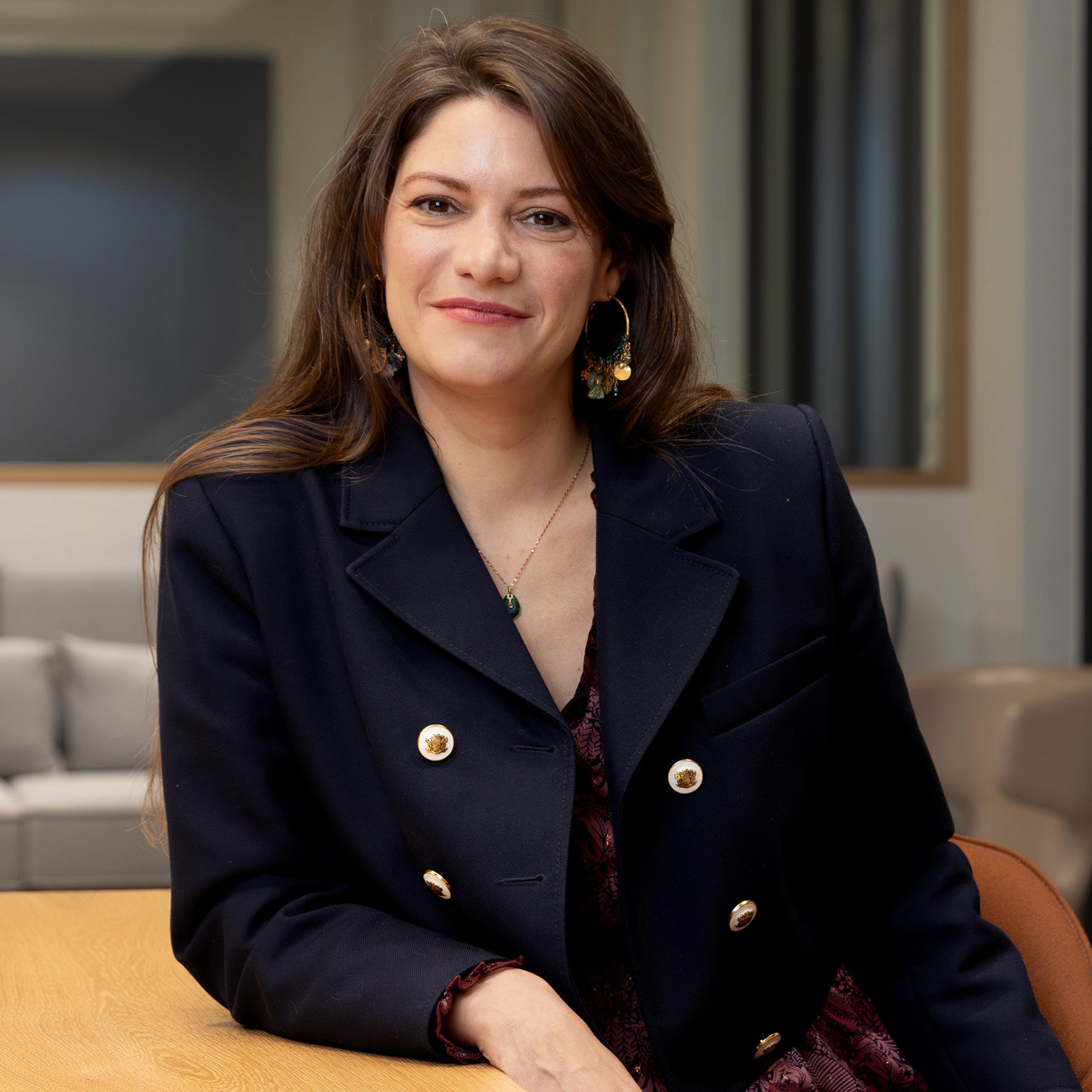
We have designed and rolled out regeneration committees across several Belgian companies, which systematically include representatives of nature and planetary boundaries. These committees, comprising internal and external stakeholders who take on the role of ‘stewards’, do not hold formal power in the strict sense of the term. Rather, they play a role in challenging, advising and influencing senior management and directors. Nevertheless, these committees have a proven and documented impact on companies’ strategy and operational decisions.

My role on the board of the Fonds 2050 is primarily to raise awareness of the absence of nature in a world characterised by artificiality. It is therefore less about changing the decision itself than about questioning the conditions under which that decision is made. It is in our ability to restore nature wherever it has been displaced that the true potential for innovation lies – enabling us to identify blind spots and avoid destructive investments.

Having Mother Nature on the board has given everyone the freedom to bring their purpose to work. We are all part of nature, including humans. Every living being on this planet is part of nature. And future generations are made up of all these forms of nature. At House of Hackney, we think 1,000 years ahead when we plan what we do today, because that is how long it takes for a forest to regenerate.

My role on the board of the Fonds 2050 is primarily to raise awareness of the absence of nature in a world characterised by artificiality. It is therefore less about changing the decision itself than about questioning the circumstances surrounding that decision. It is in the ability to restore nature wherever it has been displaced that the true potential for innovation lies – enabling us to identify blind spots and avoid destructive investments. Among our statutory objectives, the last two focus on contributing to the ecological transition and promoting the development of business models committed to generating positive impacts. Our Mission Committee supports this drive and, at the instigation of several members, we have been able to incorporate climate-related issues into this committee’s remit.

This approach to governance has deepened our understanding of how closely connected we are to the Natural world, and how much our business depends on its health and resilience. Our Nature Guardian helps us look ahead to the inevitable effects of climate change on our planet and understand how these might affect our supply chains and the ingredients available to us. Her contribution also shapes how we train and empower our people, helping to bring Nature into everyday thinking and decision-making across the business. In turn, this openness about our relationship with Nature has helped build greater transparency and trust with our customers.
Giving nature and future generations a place in our governance has changed the question we ask ourselves before making a decision: beyond immediate costs or returns, what impact will our choices have on our teams, our producers, ecosystems, living organisms and the long-term sustainability of the House? This guiding principle drives us to seek more sustainable and more equitably shared value creation. It strengthens our credibility, provided it translates into tangible decisions and results: it is this consistency between our commitments and our actions that builds our reputation.
At norsys, we view nature through the lens of planetary boundaries. To put this approach into practice, we have worked with the Stockholm Resilience Centre, which has enabled us to gain a better understanding of the impacts of our business and our value chain on these planetary boundaries, and our dependence on them.
We rely primarily on our network. We are very mindful of the people we meet along the way. Mindful of their views on our profession and their understanding of the challenges we face.
Above all, my presence helped to make the discussions more practical. For example, I emphasised to those I was speaking with the importance of interactions within forests. It is not just a question of stocks or species; it is a question of relationships. As a naturalist, I was also called upon to set concrete objectives and to highlight the value chains: paper, inks and cardboard. Understanding where things come from is key to grasping the real impact of the activity. The priority is to help people understand our interdependencies so that we can reduce our indifference.
As well as incorporating planetary boundaries into the boards of our portfolio companies, we place them at the heart of the fund’s governance bodies, particularly the board comprising the investors. We ensure that planetary boundaries are taken into account in all decisions, and as such we have the same rights as the other members of these bodies.
We have designed and rolled out regeneration committees across several Belgian companies, which systematically include representatives of nature and planetary boundaries. These committees, comprising internal and external stakeholders who take on the role of ‘stewards’, do not hold formal power in the strict sense of the term. Rather, they play a role in challenging, advising and influencing senior management and directors. Nevertheless, these committees have a proven and documented impact on companies’ strategy and operational decisions.
My role on the board of the Fonds 2050 is primarily to raise awareness of the absence of nature in a world characterised by artificiality. It is therefore less about changing the decision itself than about questioning the conditions under which that decision is made. It is in our ability to restore nature wherever it has been displaced that the true potential for innovation lies – enabling us to identify blind spots and avoid destructive investments.
Having Mother Nature on the board has given everyone the freedom to bring their purpose to work. We are all part of nature, including humans. Every living being on this planet is part of nature. And future generations are made up of all these forms of nature. At House of Hackney, we think 1,000 years ahead when we plan what we do today, because that is how long it takes for a forest to regenerate.
My role on the board of the Fonds 2050 is primarily to raise awareness of the absence of nature in a world characterised by artificiality. It is therefore less about changing the decision itself than about questioning the circumstances surrounding that decision. It is in the ability to restore nature wherever it has been displaced that the true potential for innovation lies – enabling us to identify blind spots and avoid destructive investments. Among our statutory objectives, the last two focus on contributing to the ecological transition and promoting the development of business models committed to generating positive impacts. Our Mission Committee supports this drive and, at the instigation of several members, we have been able to incorporate climate-related issues into this committee’s remit.
“Cette approche de la gouvernance nous a permis de mieux comprendre à quel point nous sommes étroitement liés au monde naturel, et combien notre entreprise dépend de sa santé et de sa résilience. Notre Gardienne de la Nature nous aide à anticiper les effets inévitables du changement climatique sur notre planète et à comprendre comment ils pourraient affecter nos chaînes d’approvisionnement et les ingrédients dont nous disposons. En retour, cette transparence sur notre relation à la Nature a renforcé la confiance de nos clients.”
Laura Ford
Directrice durabilité, Faith In Nature
“Donner une place à la Nature et aux générations futures dans notre gouvernance a changé la question que nous posons avant un arbitrage : au-delà du coût ou du rendement immédiat, quel impact nos choix auront-ils sur nos équipes, nos producteurs, les écosystèmes, le vivant et la pérennité de la Maison ? Cette boussole nous pousse à rechercher une création de valeur plus durable et mieux partagée.”
Antoine Helson
Co-fondateur, Maison Dandoy
“Chez norsys, nous appréhendons la nature sous l’angle des limites planétaires. Pour donner corps à cette approche, nous avons travaillé avec le Stockholm Resilience Centre, ce qui a permis de mieux comprendre les impacts et dépendances de notre activité et de notre chaîne de valeur sur ces limites planétaires.”
Thomas Breuzard
Actionnaire et directeur permaentreprise, Groupe norsys
“Nous nous appuyons essentiellement sur notre réseau. Nous sommes très sensibles aux personnes que nous croisons sur notre chemin, à leur regard sur notre métier et à leur compréhension de nos enjeux.”
Morgane le Breton
Co-gérante de la Maison Lebreton
“Ma présence a surtout permis de rendre les discussions concrètes. J’ai insisté pour que mes interlocuteurs perçoivent l’importance des interactions dans les forêts. Ce n’est pas seulement une question de stocks ou d’espèces, c’est une question de relations.”
Benjamin Allegrini
Représentant de la nature au comité de mission, Groupe Bayard
“En sus de mettre les limites planétaires au sein des boards de nos participations, nous les mettons au cœur des instances de gouvernance du fonds, notamment au board qui réunit les investisseurs. Nous garantissons leur prise en compte dans toutes les décisions.”
Audrey Lambry
Directrice durabilité et impact, Eurazeo
“Nous avons conçu et déployé, dans plusieurs entreprises belges, des comités de régénération incluant systématiquement des représentants de la nature et des limites planétaires. Ces comités jouent un rôle de questionnement, de conseil et d’influence auprès des dirigeants et administrateurs.”
Vincent Truyens
Fondateur, Corporate ReGeneration
“Mon rôle au sein du board du Fonds 2050 consiste surtout à faire prendre conscience de l’absence de nature dans un monde marqué par l’artificialité. Il s’agit moins de transformer la décision que de questionner les conditions de cette décision.”
Sénamé Koffi
Porte-parole de la nature, Fonds 2050
“Avoir Mère Nature au conseil a donné à chacun la permission d’apporter sa raison d’être au travail. Nous sommes tous nature, humains compris. Chez House of Hackney, nous pensons à 1 000 ans quand nous planifions ce que nous faisons aujourd’hui.”
Javvy M. Royle
Cofondateur, House of Hackney
“Parmi nos objectifs statutaires, les deux derniers ciblent la contribution à la transition écologique et la promotion du développement de modèles d’entreprises engagées dans la recherche d’impacts positifs.”
Franck Carnero
Directeur Mission et Impact, MAIF
A study involving a wide range of organisations
A study involving a wide range of organisations
This report brings together contributions from Oxford University · Sciences Po Paris · the University of Fribourg · the Potsdam Institute for Climate Impact Research (PIK) · the UN Global Compact – France Network · the Economic, Social and Environmental Council (CESE) · the Circle of Jurists on the Rights of Nature (CJDN) · Shareholders for Climate (APC).
With the support of communities and specialist organisations such as B Lab Europe · the Mission-Driven Business Community · the Earth Law Centre · Corporate ReGeneration.
Thank you to all of them for their participation, and to all the companies, foundations and associations that took part in the study.


Experts
The experts who contributed to the report
We would like to thank everyone who contributed to this major study.
We would like to thank everyone who contributed to this major study.


Presentation of the study and strategic seminars
Présentation de l'étude et
séminaires stratégiques
Presentation of the study and strategic seminars
The Vivøices team organises seminars, conferences and workshops to help businesses, foundations and organisations better understand and incorporate nature and future generations into their governance.
Please contact us for further information.
The Vivøices team organises seminars, conferences and workshops to help businesses, foundations and organisations better understand and incorporate nature and future generations into their governance.
Please contact us for further information.